(646) 452-4449


Keys to Her Story: Rediscovering the Great Women Pianists
Introduction
We are all familiar with pianists such as Mozart, Beethoven, and Chopin, who filled concert halls and history books alike. Yet, behind the same piano keys, countless women were composing their own legacies teaching, performing, and redefining what musical mastery could mean.
In this month’s blog, written by Amy Aguirre, at Manhattan Piano Academy we celebrate three remarkable pianists; Anna Esipova, Fanny Davies, and Myrtle Elvyn, those artistry and perseverance shaped the piano tradition, even as their names faded from popular memory.
Anna Nikolayevna Esipova (Yesipova): The Architect of Russian Piano Pedagogy
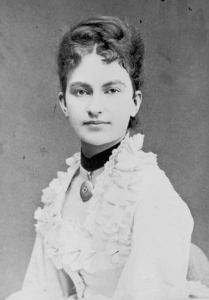 Born in 1851 in St. Petersburg, Russia, Anna Nikolayevna Esipova emerged as one of the most accomplished pianists of her generation. A student of the legendary pedagogue Theodor Leschetizky, she absorbed his technical precision and interpretive discipline, which she later refined into her own distinct style. Esipova’s performances were celebrated throughout Europe for their clarity of tone and emotional restraint, a combination that placed her among the great interpreters of Chopin and Liszt. Her artistry reflected both the virtuosity of Romanticism and the intellectual elegance that characterized late 19th-century Russian pianism.
As a teacher and performer, Esipova had an influence far beyond her concert career. Appointed to the St. Petersburg Conservatory, she became one of the few women of her time to hold a prominent academic position in music. Her students, including Sergei Prokofiev, carried forward her disciplined approach to technique and interpretation, blending emotional expressiveness with structural rigor. Esipova was not merely a conduit for Leschetizky’s tradition but an innovator in her own right, she emphasized clarity, phrasing, and tone control as vehicles for emotional depth rather than mere technical display.
Modern scholarship continues to recognize Esipova’s lasting impact on piano pedagogy. In “Anna Nikolaevna Esipova’s Traditions in the Context of Contemporary Musical Pedagogy,” L. G. Sukhova traces how her teaching principles shaped modern Russian piano education, highlighting her balance between rigor and lyricism. Esipova’s legacy endures not only through her students but also through the enduring sound ideal she championed, one where structure meets soul, and where the pianist’s touch becomes an art form of both intellect and feeling.
Fanny Davies: Brahms’s Interpreter and the English Connection
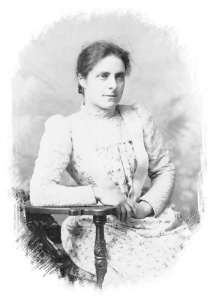 Born in 1861 on the island of Guernsey, England, Fanny Davies became one of Britain’s most distinguished pianists at the turn of the 20th century. A student of Clara Schumann, she inherited not only Schumann’s formidable technique but also her interpretive ideals such as clarity, restraint, and emotional sincerity. Davies quickly established herself across Europe as a performer of rare sensitivity, admired especially for her interpretations of Johannes Brahms’s chamber music. Her performances were marked by a deep respect for musical architecture and a finely nuanced touch that critics often described as both intellectual and intimate.
Davies’s artistry positioned her as a bridge between the German Romantic tradition and the emerging English school of piano playing. She championed Brahms’s works at a time when his music was still considered challenging and complex, and she often collaborated with leading instrumentalists of her day in landmark performances of his chamber repertoire. More than a performer, she passed down Clara Schumann’s interpretive lineage, ensuring that the expressive phrasing and balance Schumann prized continued to shape the musical sensibilities of the early 20th century.
Scholars have increasingly recognized Davies’s pivotal role in preserving this tradition. In the essay “Fanny Davies and the Performance of Brahms’s Late Chamber Music” (Cambridge University Press, 2003), George S. Bozarth situates her within a direct line of transmission from Schumann to Brahms, showing how her performances embodied their shared aesthetic ideals. Through Davies, the emotional and interpretive traditions of Clara Schumann, and, by extension, Brahms, found a lasting English voice, one that blended expressive depth with intellectual refinement and continues to inform our understanding of Romantic performance practice today.
Myrtle Elvyn: The American Virtuosa Who Dared to Compete
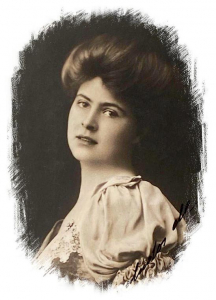 Born in 1887 in Chicago, Illinois, Myrtle Elvyn emerged as one of the first American women pianists to achieve international acclaim during the early 20th century. Trained in Europe under the guidance of celebrated teachers, Elvyn absorbed the Continental traditions of Romantic pianism while cultivating her own distinctly American voice. Her interpretations of Liszt, Chopin, and contemporary American composers earned her recognition for both technical brilliance and expressive poise. By the time she returned to the United States for concert tours, she had established herself as a pioneering figure in a field still largely dominated by men.
Elvyn’s career was characterized by boldness and versatility. She toured extensively throughout Europe and North America, performing with major orchestras and appearing in prestigious concert halls at a time when opportunities for women soloists were scarce. Critics praised her for her commanding tone, rhythmic precision, and interpretive insight which are the qualities that placed her among the leading pianists of her generation. Beyond performance, Elvyn served as an inspiration for aspiring women musicians, embodying the possibilities of artistic independence and international recognition.
Though her name has faded from mainstream histories, recent scholarship and archival work have begun to reappraise Elvyn’s significance. Biographical entries such as those in the International Encyclopedia of Women Composers and Performers and early 20th-century journals like Musical America document a career that challenged conventions and broadened the landscape for women in classical music.
Beyond the Notes: Why Their Stories Matter
The stories of Esipova, Davies, and Elvyn challenge the notion that musical greatness has a
single face or voice. Their work reveals a lineage of female mentorship, innovation, and
resilience. Today, their rediscovery speaks to a broader movement within musicology, to recover
and reframe the contributions of women whose artistry shaped the canon but was never fully
credited. I encourage you all to take a listen to their recordings that are available.
References
- 2025. Classical-Pianists.net. 2025.
https://classical-pianists.net/generation-vii/myrtle-elvyn/ - “Anna Yesipova – Tchaikovsky Research.” 2023. Tchaikovsky-Research.net. 2023.
https://en.tchaikovsky-research.net/pages/Anna_Yesipova - Bozarth, George S. “Fanny Davies and the Performance of Brahms’s Late Chamber
Music.” In Performing Brahms: Early Evidence, Interpretation, and Performance
Practice, edited by Michael Musgrave and Bernard D. Sherman, 243–264. Cambridge:
Cambridge University Press, 2003. - Cohen, Aaron I., ed. International Encyclopedia of Women Composers and Performers.
New York: Books & Music (USA), 1995. - “Fanny Davies.” 2024. Classical Pianists. June 5, 2024.
https://classical-pianists.net/generation-vi/fanny-davies/ - “Esipova, Anna Nikolayevna.” In Grove Music Online . Oxford University Press.
- “Myrtle Elvyn.” Musical America 10, no. 3 (1910): 45.
- Sukhova, L. G. “Anna Nikolaevna Esipova’s Traditions in the Context of Contemporary
Musical Pedagogy.” Vestnik of Saint Petersburg University: Arts 9, no. 3 (2019):
412–425.